
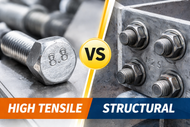
High Tensile vs Structural Bolts: What’s the Difference (and When to Use Each)
30th Mar 2026
Introduction
If you’ve ever wondered whether a high tensile bolt can be used in place of a structural bolt, you’re not alone.
It’s one of the most common mistakes across construction, maintenance, and engineering projects — and getting it wrong can lead to compliance issues, structural failure, or costly rework.
In this guide, we’ll break down:
- The real difference between high tensile and structural bolts
- When each should be used
- The critical mistakes to avoid
? If you haven’t already, read our full Structural Bolts Guide – Standards, Types, Installation & Specifications - KonnectDirect for a deeper dive into structural applications.
What Are High Tensile Bolts?
High tensile bolts are fasteners made from high-strength steel, designed to handle higher loads than standard bolts.
Key Characteristics:
- Typically graded as 8.8, 10.9, or 12.9
- Designed for general high-load applications
- Not always compliant with structural standards
- Installed using standard torque methods
Common Uses:
- Machinery and equipment
- Automotive applications
- General engineering
- Non-critical load-bearing connections
? Browse our range of high tensile bolts here Buy Bolts Online | Hex, U-Bolts & More - Konnect Direct
What Are Structural Bolts?
Structural bolts are specifically engineered for steel-to-steel structural connections, where safety and compliance are critical.
In Australia, they are manufactured and used in accordance with standards such as:
- AS/NZS 1252 (high-strength structural bolts)
- Installation methods aligned with structural engineering requirements
Key Characteristics:
- Designed for preloaded (tensioned) connections
- Used in critical load-bearing structures
- Installed using controlled methods (e.g. tensioning, turn-of-nut)
Common Uses:
- Structural steel frameworks
- Bridges and infrastructure
- Commercial construction
- Mining and heavy industry
? Read the full breakdown in our Structural Bolts Guide – Standards, Types, Installation & Specifications - KonnectDirect
High Tensile vs Structural Bolts: Key Differences
| Feature | High Tensile Bolts | Structural Bolts |
|---|---|---|
| Purpose | General high-strength fastening | Structural load-bearing connections |
| Standards | Varies (not always structural) | AS/NZS 1252 compliant |
| Installation | Torque-based | Preload/tension controlled |
| Application | Machinery, general use | Steel structures, construction |
| Compliance | Not guaranteed | Mandatory for structural work |
When Should You Use Each?
Use High Tensile Bolts When:
- The application is non-structural
- You need strength but not certified compliance
- You're working on machinery or general fabrication
Use Structural Bolts When:
- The connection is load-bearing or safety-critical
- The project requires engineering certification
- You are working within construction or infrastructure
? Rule of thumb:
If the job involves structural steel — always use structural bolts.
What is the difference between high tensile and structural bolts?
High tensile bolts are designed for general high-strength applications, while structural bolts are specifically manufactured and installed for load-bearing structural connections in compliance with standards such as AS/NZS 1252.
Common Mistakes (That Cost Time and Money)
1. Using High Tensile Bolts in Structural Applications
Just because a bolt is strong doesn’t mean it meets structural standards.
2. Assuming Grades = Compliance
A grade 8.8 bolt is not automatically a structural bolt.
3. Incorrect Installation Methods
Structural bolts require specific tensioning — not just tightening.
4. Mixing Bolt Types on the Same Project
This can lead to compliance failures during inspection.
Frequently Asked Questions
What is the difference between high tensile and structural bolts?
High tensile bolts are designed for general high-strength applications, while structural bolts are specifically manufactured and installed for load-bearing structural connections in compliance with standards such as AS/NZS 1252.
Can high tensile bolts be used instead of structural bolts?
No, high tensile bolts should not be used in structural applications unless they meet the required structural standards. Structural bolts are designed for preloaded connections and compliance with engineering specifications.
What standard applies to structural bolts in Australia?
Structural bolts in Australia are typically manufactured to AS/NZS 1252, which covers high-strength steel bolts used in structural engineering applications.
Are grade 8.8 bolts considered structural bolts?
No, grade 8.8 bolts are high tensile bolts but are not automatically classified as structural bolts unless they meet specific structural standards and installation requirements.
Why do structural bolts need to be tensioned?
Structural bolts are tensioned to create a clamping force between steel components, ensuring the connection can safely handle loads without slipping or failing.
What happens if you use the wrong bolt?
Using the wrong bolt can result in structural failure, failed inspections, safety risks, and costly rework.